

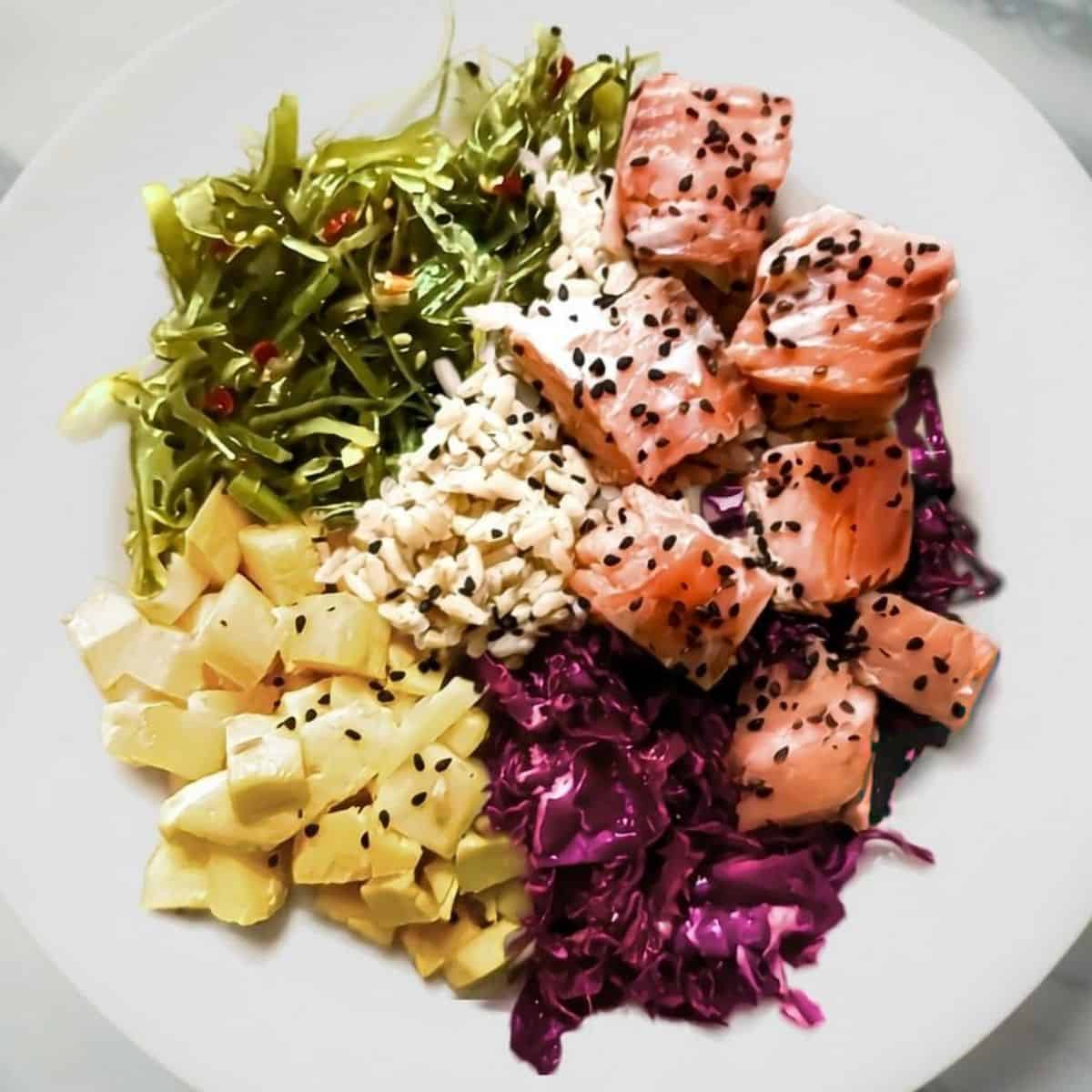
✨ This easy cooked salmon poke bowl combines baked salmon, brown rice, sweet mango, seaweed salad, and sesame ginger red cabbage. It is a convenient, affordable alternative to raw fish poke and works beautifully for easy dinners or meal prep. 🍚🥭 Assemble the rice and cold toppings ahead, store the salmon separately, and reheat it just before serving.
Quick Look: Cooked Salmon Poke Bowl
✨ Why you'll love it: This colorful salmon poke bowl makes it easy and affordable to enjoy a poke inspired meal at home using fresh or frozen salmon.
👌 Difficulty: Easy
👩🍳 Anna's tested tip: Dress the red cabbage before preparing the other toppings. Resting in the sesame ginger dressing gives the cabbage more flavor and gently tenderizes it.
🥗 Taste and texture: Savory, sweet, and tangy with tender salmon, chewy brown rice, crunchy cabbage, sweet mango, and seasoned seaweed salad.
⏱️ Prep, cook, and total time: 20 minutes prep, 45 minutes cook, and 45 minutes total. You'll prepare the majority of it while the brown rice cooks.
🍽️ Yield: 4 bowls
🥣 Key ingredients: Salmon, brown rice, red cabbage, mango, prepared seaweed salad, sesame oil, and extra virgin olive oil.
❤️ Dietary highlights: This Mediterranean inspired bowl combines omega-3 rich salmon with a whole grain, colorful produce, and heart healthy unsaturated fats.
🎒 Perfect for: Quick dinners, meal prep lunches, meals on the go, or a deconstructed family dinner.
Want to remember this recipe later? Ask your favorite AI assistant to summarize it for you. 👇🥰
Jump to:
- Quick Look: Cooked Salmon Poke Bowl
- Why You'll Love This Cooked Salmon Poke Bowl
- What Is a Cooked Salmon Poke Bowl?
- Nutrition Scorecard: Why This Salmon Bowl Is a Mediterranean Diet Win
- Ingredients for Cooked Salmon Poke Bowls
- Ingredient Tips
- Equipment
- Instructions
- Top Tip
- Easy Variations
- My Favorite: Make It a Deconstructed Dinner for Kids
- Meal Prep Tips and Storage
- Cooked Salmon Poke Bowl FAQs
- Related
- 📖 Recipe
- Notes
Why You'll Love This Cooked Salmon Poke Bowl
This cooked salmon poke bowl was an accidental discovery that quickly became one of my favorite quick dinners.
One summer evening, I needed a quick dinner that I could take to the pool. I combined some of my favorite poke bowl ingredients with baked salmon, packed everything up, and headed out the door. It was so delicious and convenient that I kept making it!
Poke bowls are one of my favorite meals, but I don't always have time to drive to our wonderful Japanese grocery store for sushi grade fish. I almost always have frozen salmon available, though. Baking the salmon makes this version easier, more accessible, and considerably less expensive than ordering poke or purchasing sushi grade fish.
My kids also enjoy this meal served deconstructed. I place the salmon, rice, mango, cabbage, and seaweed salad on the table separately and let everyone choose the ingredients they like. That flexibility makes it a helpful dinner for families with different preferences or picky eaters.
It is also a great meal prep lunch. Assemble the rice and cold toppings in individual containers, keep the salmon separate, and add the reheated salmon when you are ready to eat.
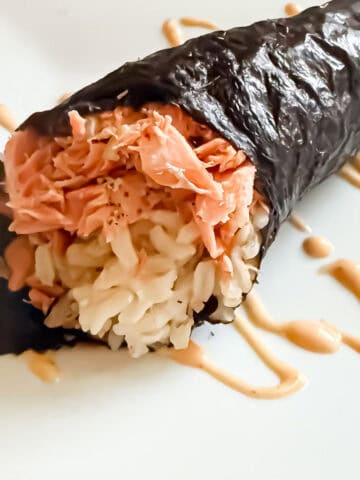
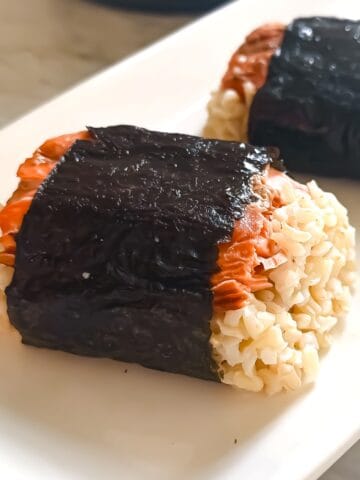
If you also like the combination of cooked salmon, rice, and seaweed, try my salmon musubi next.
Enjoy!

What Is a Cooked Salmon Poke Bowl?
A cooked salmon poke bowl is a rice bowl inspired by traditional Hawaiian poke but made with baked salmon instead of raw fish. This version includes brown rice, sesame ginger red cabbage, mango, prepared seaweed salad, and bite size pieces of cooked salmon.
Because the salmon is completely cooked, you do not need to find sushi grade fish. Fresh or properly thawed frozen salmon will both work.
This is a poke inspired bowl rather than a traditional Hawaiian poke recipe. Its ingredients and sesame ginger flavors also draw inspiration from Japanese and other Asian cuisines.
Nutrition Scorecard: Why This Salmon Bowl Is a Mediterranean Diet Win
This bowl brings together several building blocks of the Mediterranean Diet: fish, a whole grain, colorful vegetables, fruit, and extra virgin olive oil.
Salmon: : Salmon provides protein and omega-3 fatty acids. The American Heart Association recommends eating two servings of fish each week, particularly fatty fish such as salmon. Each bowl in this recipe provides approximately 3 ounces of cooked salmon. You can learn more about the benefits of salmon from Cleveland Clinic.
Red cabbage: The beautiful purple red color of red cabbage comes from plant pigments called anthocyanins. Red cabbage also contributes fiber, vitamin C, and a variety of beneficial plant compounds. Using vegetables in many different colors is an easy way to add variety to a Mediterranean pattern of eating.
Brown rice: Brown rice is a whole grain, meaning it retains more of the grain's original bran and germ than white rice. It contributes fiber, texture, and staying power to the bowl.
Extra virgin olive oil: The sesame ginger dressing includes extra virgin olive oil, a primary source of fat in the Mediterranean Diet. It supplies mostly monounsaturated fat and helps carry the flavors of the garlic, ginger, soy sauce, and rice vinegar.
Mango: Mango brings natural sweetness, color, and vitamin C. Its sweetness balances the savory salmon, soy sauce, and seaweed salad without requiring an additional sweet sauce.
Seaweed salad: Seaweed adds flavor, texture, and naturally occurring minerals. Prepared seaweed salads can contain significant sodium and added sugar, so ingredients and nutrition information will vary by brand. Check the product label to make sure it aligns with your nutritional needs.
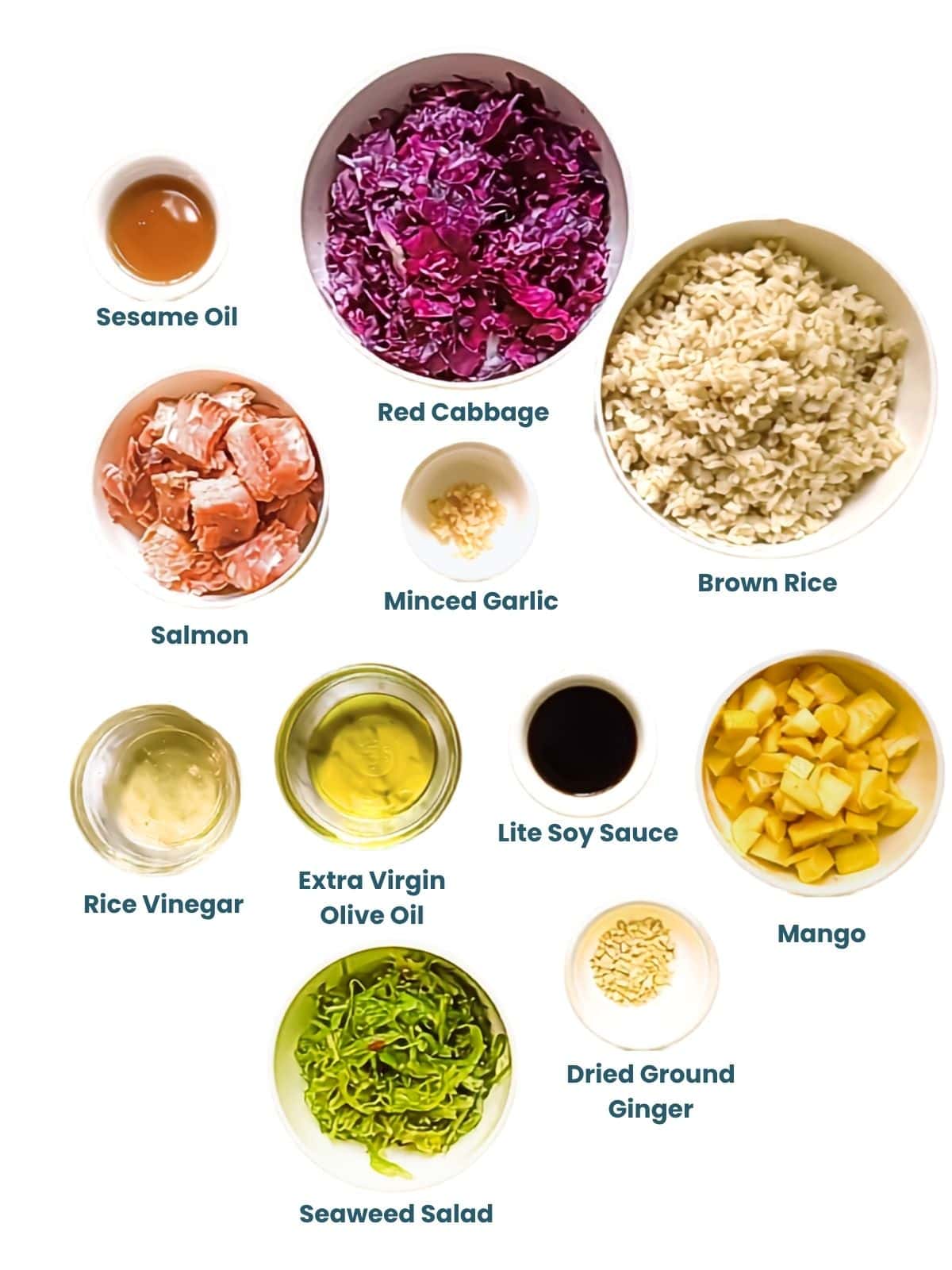
Ingredients for Cooked Salmon Poke Bowls
Ingredient Tips
Dress the cabbage early: The cabbage becomes more flavorful and tender as it rests in the sesame ginger dressing. You can prepare it ahead of time and refrigerate it until you are ready to assemble the bowls.
Using frozen mango: Thaw the mango, drain away any released liquid, and pat it dry before adding it to the bowl. This prevents excess moisture from collecting in the bowl or meal prep container.
If your salmon has skin: Bake the salmon with the skin attached. After cooking, slide a spatula between the flesh and skin or gently pull away the skin before cutting the salmon into pieces.
Choosing seaweed salad: I typically use C-Weed prepared seaweed salad from Costco. You may also find prepared seaweed salad at a grocery store sushi counter, a Japanese grocery store, or online.
Prepared seaweed salad is not the same as plain dried wakame. Do not substitute dried wakame in equal quantities without first rehydrating and seasoning it.
Prepared versions vary considerably in ingredients, sodium, added sugar, and storage directions. Follow the package instructions for the product you purchase.
Equipment
- Medium saucepan with a lid
- Baking sheet
- Parchment paper, optional (I LOVE If You Care's parchment paper. It's PFAS free and works great!)
- Sharp knife or box grater
- Cutting board
- Four bowls or meal prep containers
- Small jar or bowl for mixing the dressing
Instructions
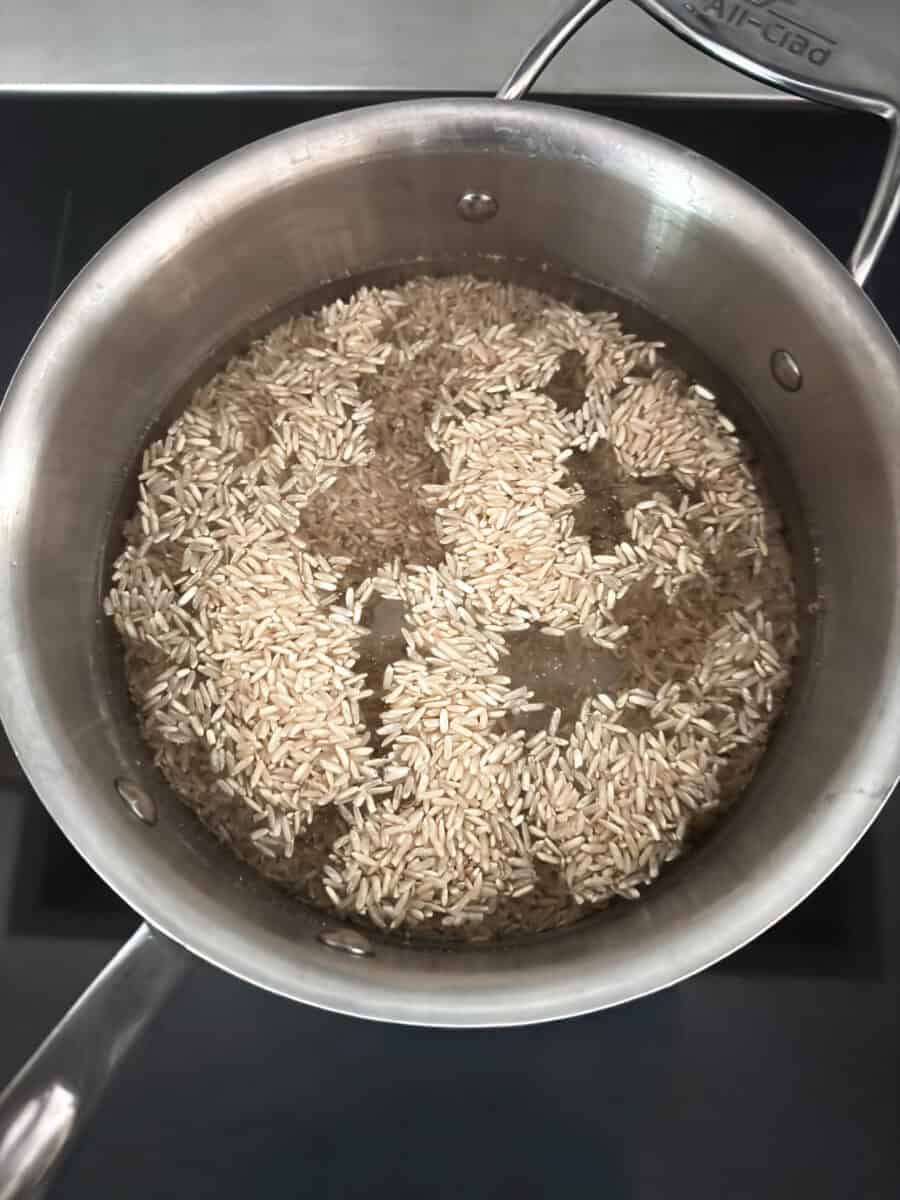
Cook the Brown Rice
Combine the brown rice and water in a saucepan and cook according to the package instructions, about 45 minutes.
While the rice cooks, preheat the oven to 400°F.
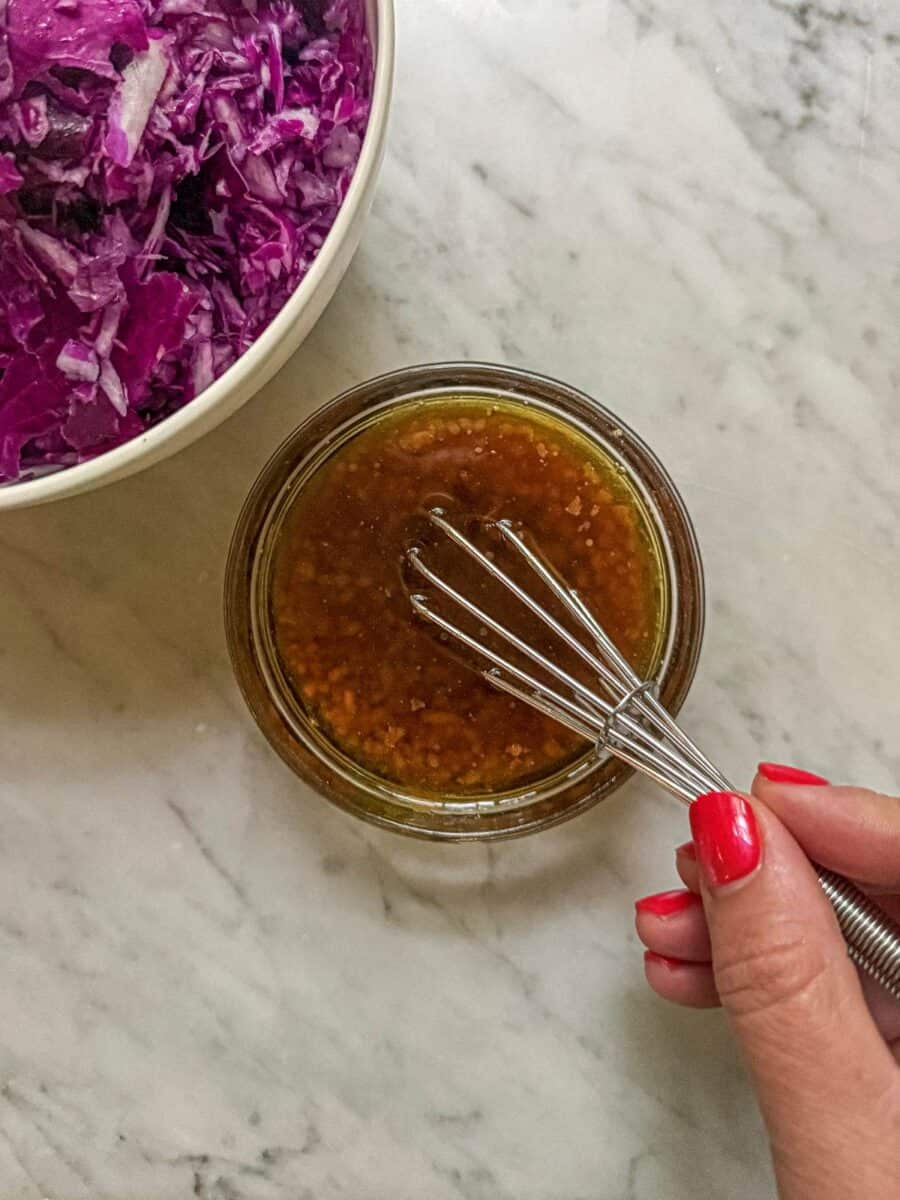
Make the Sesame Ginger Red Cabbage
Add the toasted sesame oil, extra virgin olive oil, rice vinegar, lite soy sauce, dried ginger, and minced garlic to a small jar. Cover and shake until combined.
Finely shred the red cabbage using a knife or box grater. Pour the dressing over the cabbage and toss until evenly coated. Set it aside so the cabbage can absorb the dressing and begin to soften.
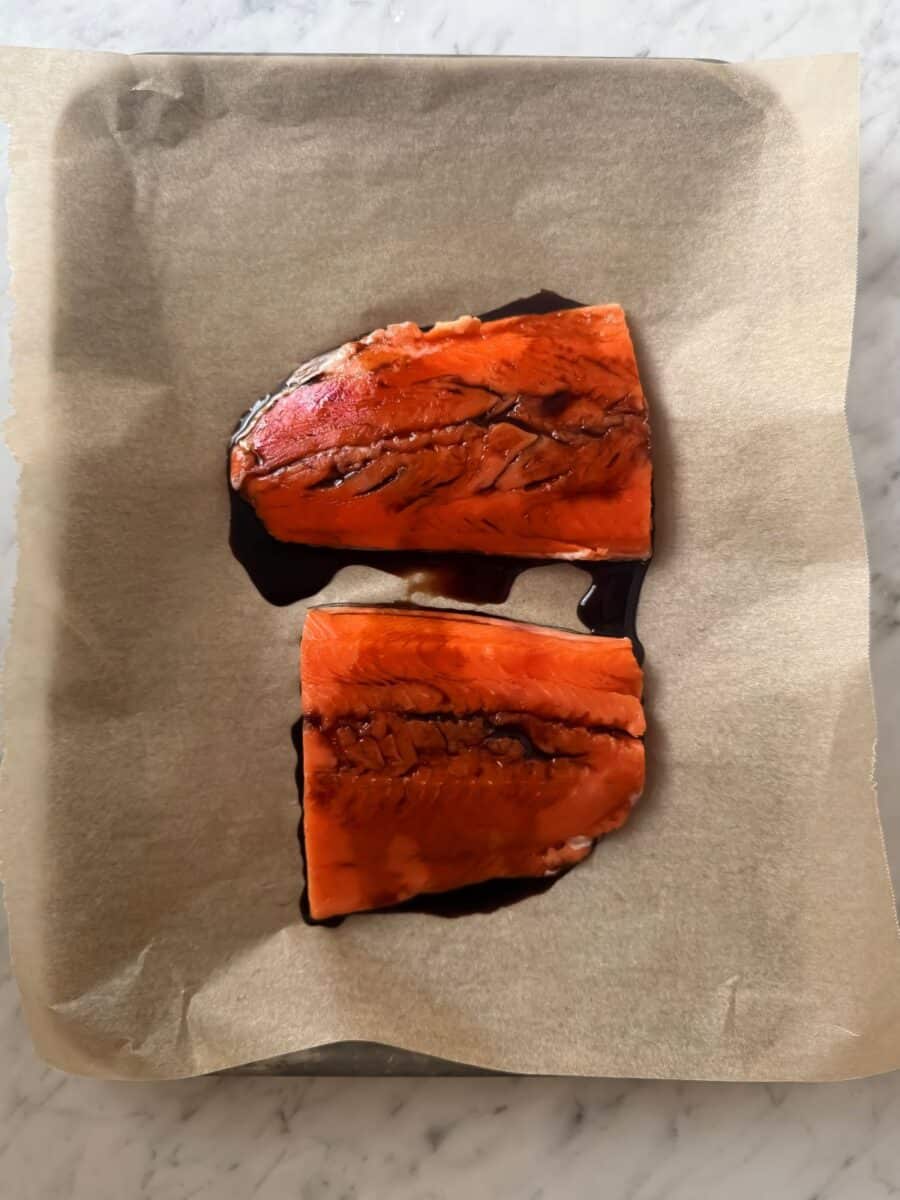
Bake the Salmon
If using frozen salmon, thaw it according to the package directions.
Place the salmon on a baking sheet and drizzle it with lite soy sauce.
Bake for 12 to 14 minutes, or until the salmon is opaque, flakes easily with a fork, and reaches 145°F in the thickest part.
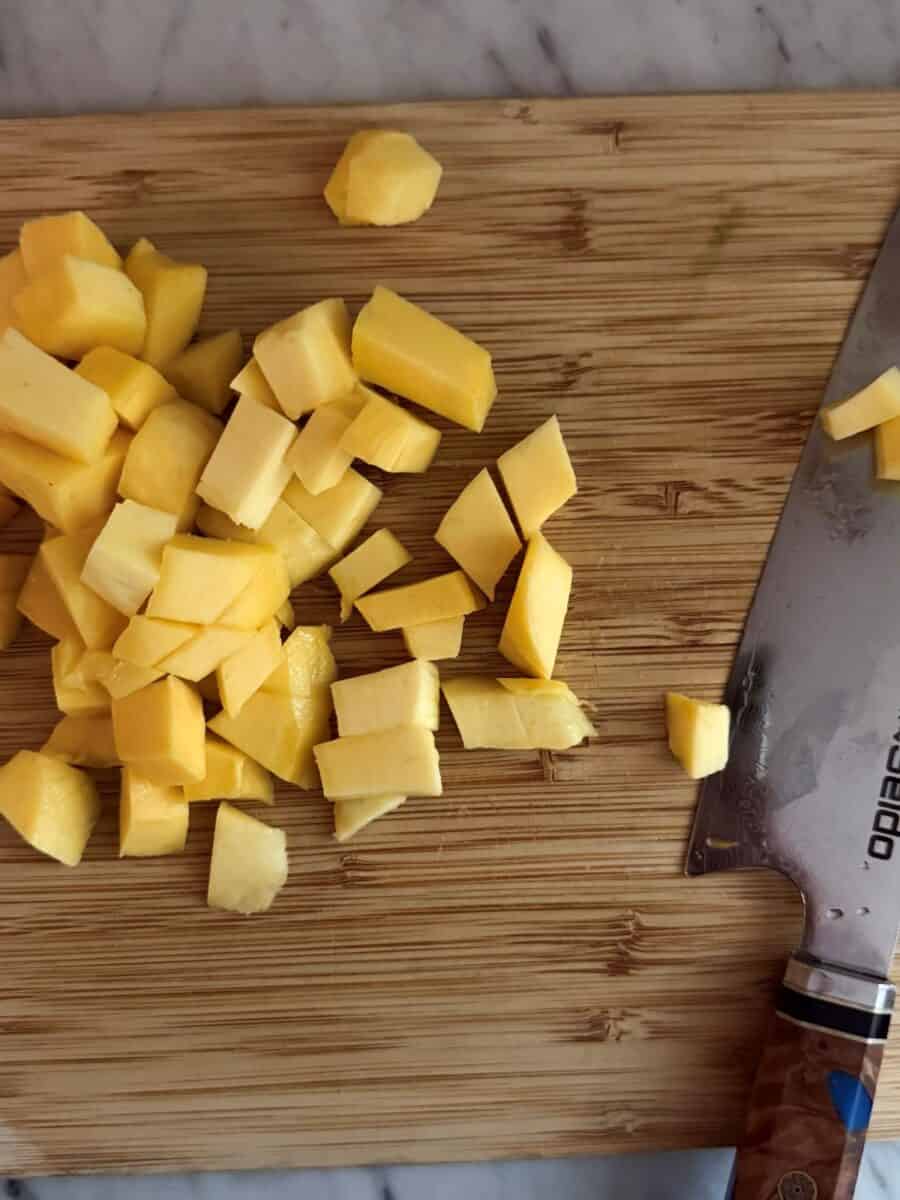
Prepare the Mango
Cut fresh mango into bite size pieces.
If using frozen mango, thaw it completely, drain the excess liquid, and pat it dry.
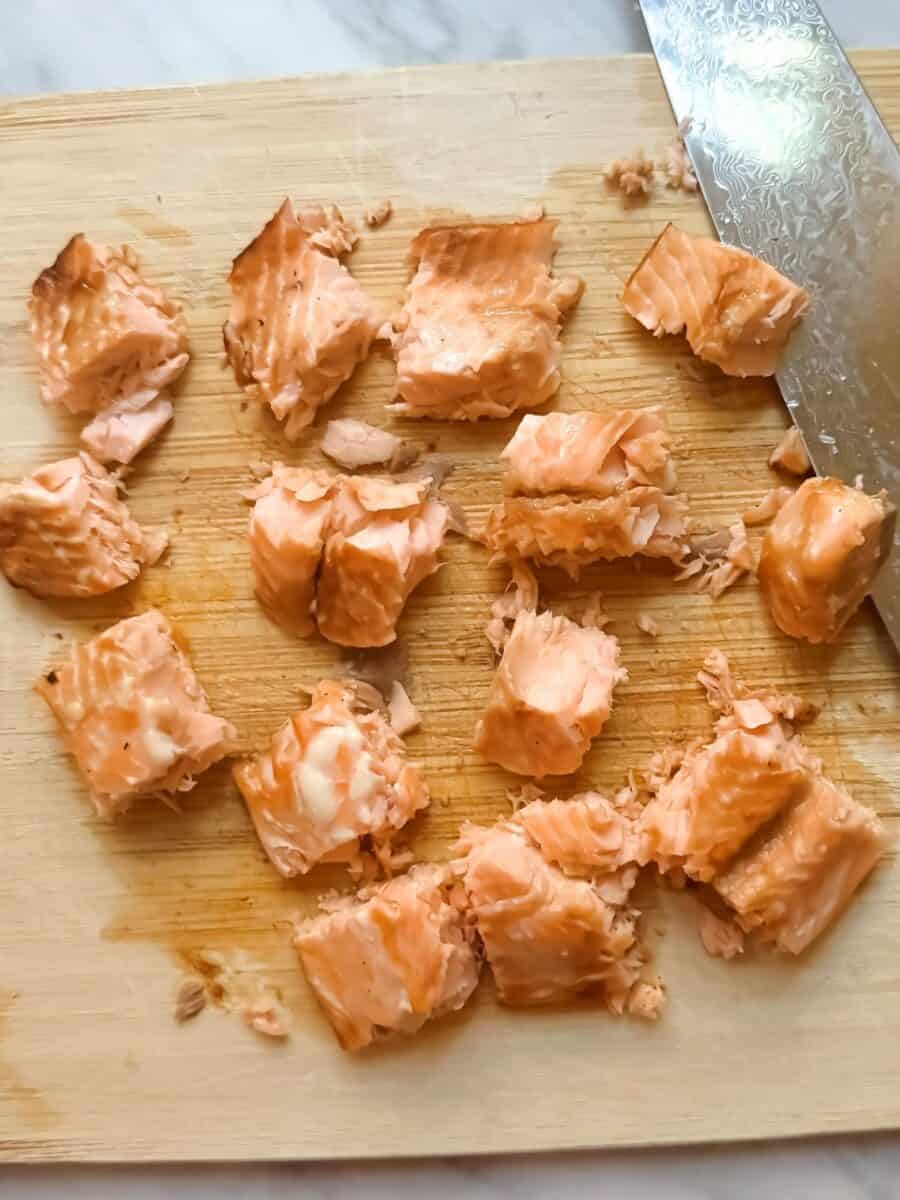
Cut the Cooked Salmon
Transfer the cooked salmon to a cutting board. If the fillet has skin, remove it now.
Cut the salmon into bite size pieces approximately 1 inch across. The pieces do not need to be perfectly uniform, and the salmon may flake slightly as you cut it.
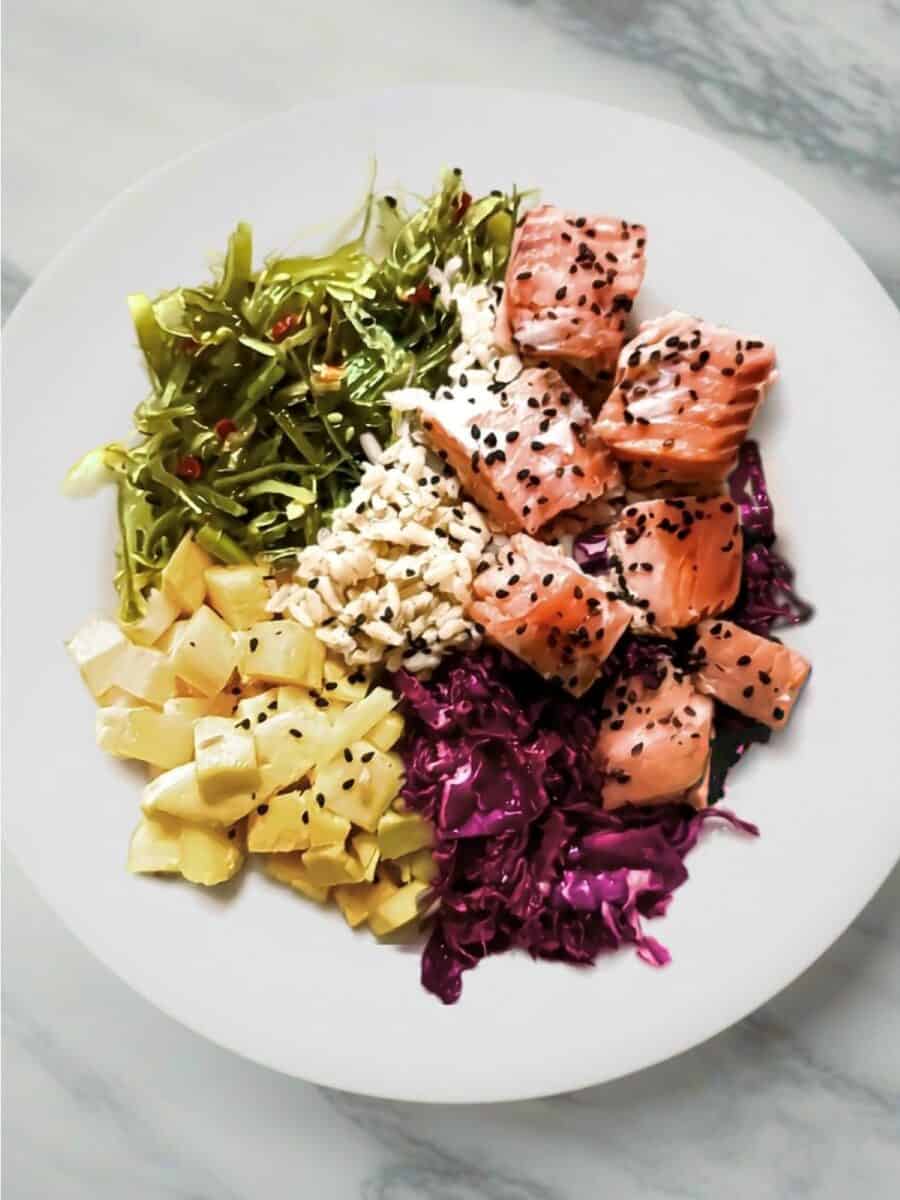
Assemble the Poke Bowls
Divide the ingredients among bowls. Add ½ cup cooked brown rice, ½ cup sesame ginger red cabbage, ½ cup mango, ½ cup prepared seaweed salad, and approximately 3 ounces of cooked salmon to each bowl.
Garnish with sesame seeds, if desired, and serve.
Top Tip
Allow about 45 minutes for the brown rice to cook, even if the package suggests a shorter time. I also use 2¼ cups of water instead of the typical 2 cups because I find brown rice can dry out before it becomes tender. Rice yields vary by brand, so measure 2 cups of cooked rice among the four bowls and refrigerate any extra.
Easy Variations
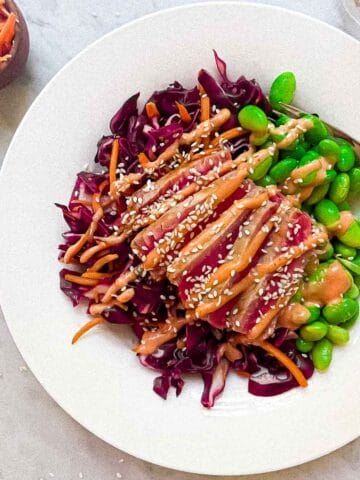
Make it a salmon poke salad: Skip the brown rice and serve the sesame ginger cabbage, mango, seaweed salad, and cooked salmon over extra red cabbage. If you enjoy seafood salads, you may also like this seared ahi tuna salad.
Make it gluten free: Replace the lite soy sauce with certified gluten free tamari and verify that the prepared seaweed salad is gluten free.
Use fresh mango: Fresh mango offers a slightly firmer texture and makes a lovely choice when serving the bowls for a special dinner.
Use frozen mango: Thaw, drain, and pat the mango dry for an affordable and convenient everyday option.
Add more vegetables: Add cucumber, shredded carrots, avocado, or edamame. These are delicious additions, but they are not necessary to make a colorful and satisfying bowl.
My Favorite: Make It a Deconstructed Dinner for Kids
This is a great meal to serve deconstructed for kids or family members who prefer to keep different foods separate.
Place the rice, salmon, mango, dressed cabbage, and seaweed salad in individual serving dishes. Let everyone build a bowl or choose the components they enjoy. You can also reserve some plain rice, mango, and salmon before assembling the more flavorful bowls.
Meal Prep Tips and Storage
These cooked salmon poke bowls can be assembled ahead for easy lunches.
- Put individual servings of brown rice, sesame ginger cabbage, mango, and prepared seaweed salad among airtight meal prep containers.
- Store the cooked salmon separately so you can reheat it without warming the cold toppings.
- Refrigerate the prepared bowls and salmon promptly and enjoy them within 3 days for the best overall quality.
- When you are ready to eat, reheat the salmon separately. I start with approximately 30 seconds in the microwave, adding more time as needed depending on the microwave and thickness of the salmon.
- Add the warm salmon to the prepared cold bowl immediately before eating.
- Follow the storage instructions on your seaweed salad package. The C-Weed seaweed salad instructs you to refrigerate it and use it within 5 to 7 days of opening.
- You may also enjoy the cooked salmon and rice cold if you prefer.
Keep the bowls refrigerated or in a well-insulated cooler until you are ready to eat. Do not leave them at room temperature for longer than 2 hours, or longer than 1 hour when the temperature is above 90°F.
Freezing the assembled bowls is not recommended because the cabbage, mango, and seaweed salad may lose their intended texture after thawing.
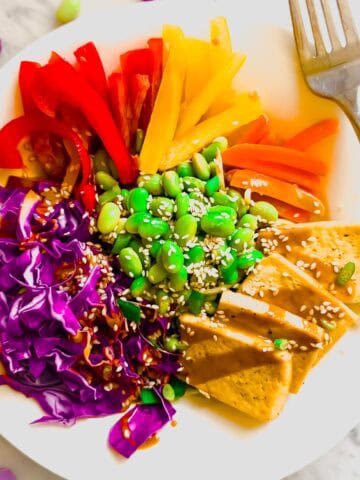
For another colorful lunch you can prepare in advance, try my Asian Buddha bowl.
Cooked Salmon Poke Bowl FAQs
No. Because the salmon is baked until completely cooked, you do not need to purchase sushi grade fish. Use fresh salmon or properly thawed frozen salmon and cook it to 145°F in the thickest part.
Yes! Although traditional poke is generally made with raw, cubed seafood, you can make a poke inspired bowl with baked salmon. Cooked salmon provides similar bowl style flavors and toppings without requiring raw fish.
Yes. I frequently use frozen salmon because I almost always have it available. Thaw it according to the package directions before baking.
Yes. Frozen mango works very well in this recipe. Thaw it completely, drain off any released liquid, and pat it dry before adding it to the bowl.
Yes. Dressing the red cabbage ahead gives it more time to absorb the sesame ginger flavor and gently tenderizes it. Cover and refrigerate the dressed cabbage until you are ready to assemble the bowls.
Yes. Assemble the rice, cabbage, mango, and seaweed salad in individual containers and store the cooked salmon separately. Reheat the salmon before adding it to the cold bowl. For the best overall texture, enjoy the prepared bowls within 3 days.
Yes. Properly refrigerated cooked salmon and rice can be enjoyed cold. If you prefer warm salmon, reheat it separately so the mango, cabbage, and seaweed salad remain cold.
Store the salmon separately and microwave it for approximately 30 seconds. Continue heating it in short intervals if necessary. Add the warm salmon to the cold rice and toppings immediately before eating.
Cucumber salad provides a similarly cool, refreshing contrast, although it will change the bowl's characteristic seaweed flavor. You could also prepare and season rehydrated wakame, but plain dried wakame is not a direct substitute for prepared seaweed salad.
Related
Looking for other recipes like this? Try these:
📖 Recipe
Ingredients
Brown Rice
- 1 cup dry brown rice
- 2¼ cups water
Red Cabbage with Sesame Ginger Dressing
- 2 cups finely shredded red cabbage
- For the Sesame Ginger Dressing:
- 1 tablespoon toasted sesame oil
- 1 tablespoon extra virgin olive oil
- 2 tablespoons rice vinegar
- 1 tablespoon lite soy sauce
- ½ teaspoon dried ginger
- 2 cloves garlic, minced
Salmon
- 1 pound uncooked salmon fillets
- 1 teaspoon lite soy sauce
Poke Bowls
- 2 cups prepared seaweed salad
- 2 cups fresh or frozen mango, cut into bite-size pieces
- Sesame seeds, optional, for garnish
Instructions
Cook the brown rice.
- Combine the brown rice and water in a saucepan and cook according to the package instructions, about 45 minutes.
Preheat the oven.
- While the rice cooks, preheat the oven to 400°F.
Make the red cabbage with sesame ginger dressing.
- Add the toasted sesame oil, extra virgin olive oil, rice vinegar, lite soy sauce, dried ginger, and minced garlic to a small jar. Cover and shake until well combined.
- Finely shred the red cabbage with a knife or box grater. Pour the dressing over the cabbage and toss until evenly coated. Set aside.
Bake the salmon.
- If using frozen salmon, thaw according to the package instructions. Place the salmon on a baking sheet and drizzle with lite soy sauce.
- Bake for 12-14 minutes, or until the salmon is opaque, flakes easily with a fork, and reaches 145°F in the thickest part.
Prepare the mango.
- Cut fresh mango into bite-size pieces. If using frozen mango, thaw it, drain any excess liquid, and pat it dry before adding it to the bowl.
Cut the salmon.
- Transfer the cooked salmon to a cutting board and cut it into bite-size pieces, about 1 inch each.
Assemble the poke bowls.
- Divide the ingredients among four bowls. Add ½ cup cooked brown rice, ½ cup red cabbage with sesame ginger dressing, ½ cup mango, ½ cup prepared seaweed salad, and approximately 3 ounces cooked salmon to each bowl.
- Garnish with sesame seeds, if desired, and serve.

Leave a Reply